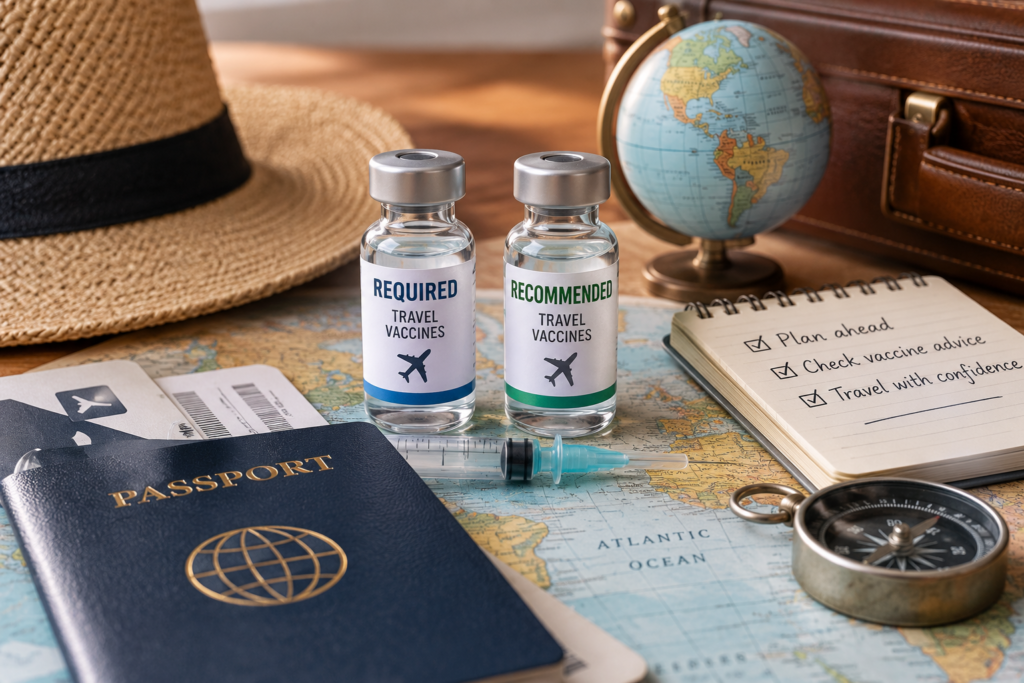


The most common travel vaccination mistakes are booking too late, skipping boosters, and forgetting the yellow fever certificate. Many also assume their childhood jabs are enough.
Others skip malaria tablets, lose their records or take health advice from social media. The fix is simple: see a travel clinic 4 to 6 weeks before you fly.
Mistake number four has left people stuck at border control. Here is the full checklist, so it does not happen to you.
10 Common Travel Vaccination Mistakes to Avoid

Booking flights and hotels is the fun part. Health prep is not, which is exactly why it gets pushed to the bottom of the list.
One missed jab can turn a dream trip into a week in a foreign hospital. Use these ten points as a quick check before you go.
1. Leaving Vaccinations Until the Last Minute
Vaccines do not work the moment they go in. Your body needs time to build protection, often around two weeks.
Some also need more than one visit. A standard rabies course has three doses given over 21 to 28 days. These doses are on days 0, 7, and 21 to 28. If you need to travel soon, there’s an accelerated schedule with just two doses on days 0 and 7. That is why 4 to 6 weeks before you fly is the sweet spot.
Already too close to your trip? Come in anyway. A partial plan still beats no plan.
2. Assuming Routine UK Vaccines Are Enough
Your NHS childhood jabs, like MMR and the diphtheria, tetanus and polio vaccine, do a great job at home. They don’t cover all the diseases you may encounter abroad.
They will not protect you against typhoid, hepatitis A, rabies or yellow fever. Those need their own vaccines, picked for where you are going.
3. Not Checking Destination-Specific Requirements
Risk depends on exactly where you go, not just the country. A week in a Phuket resort and a month trekking in rural northern Thailand are very different trips.
The trekker should consider protection against Japanese encephalitis and rabies. They also need stronger bite prevention. The resort guest may need far less. Time of year, length of stay and activities all change the advice.
4. Forgetting the Yellow Fever Certificate
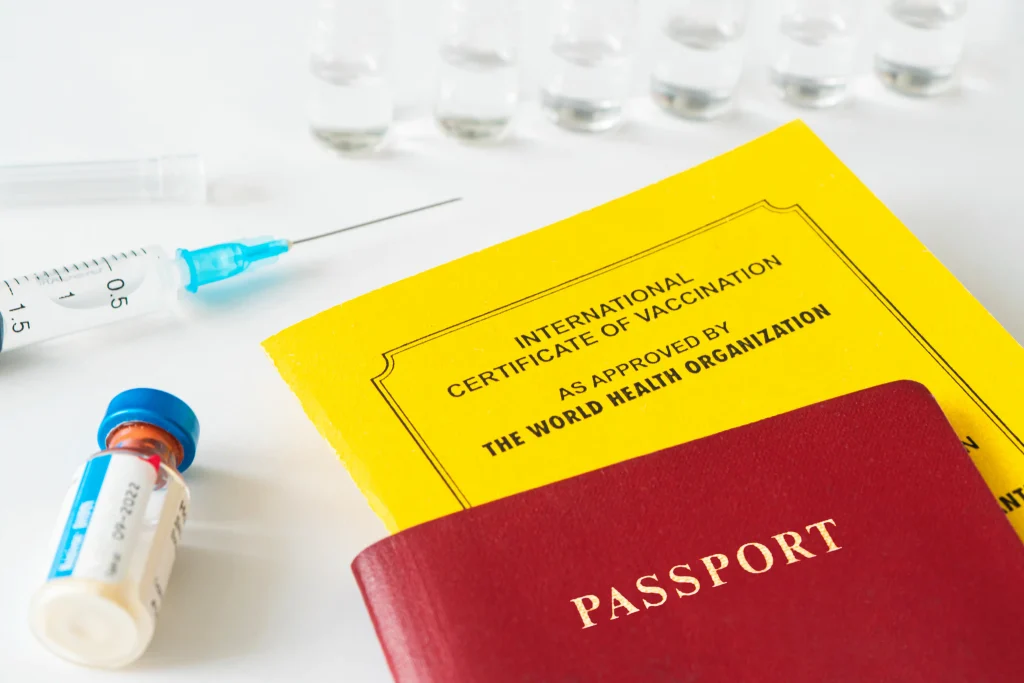
This is the travel nightmare nobody plans for. Some countries will refuse entry without proof of yellow fever vaccination.
The official document is the International Certificate of Vaccination or Prophylaxis (ICVP). According to WHO guidelines, the ICVP is valid for life for most travellers. However, there may be exceptions for entry requirements, booster rules, or re-issuance under certain conditions. It only becomes valid 10 days after your jab, so leaving it late can mean missing your flight.
Some countries ask for it even if you only passed through a risk area. Keep it with your passport, as it can be hard to replace.
5. Not Finishing a Multi-Dose Course
Hepatitis B needs shots at 0, 1, and 6 months. Rabies shots are given on days 0, 7, and 21 to 28. Japanese encephalitis requires two doses 28 days apart, or days 0 and 7 for adults 18 to 65. All these vaccines follow multi-dose schedules. Stopping after the first leaves the job half-done.
One jab may give some protection, but often not enough to rely on. Put every follow-up date in your calendar before you leave the clinic.
Missed one? You usually do not need to start again. Just book the next dose as soon as you can.
6. Letting Boosters Lapse
Some protection fades over time. The typhoid injection, for example, usually needs a booster every three years if you are still at risk.
The diphtheria, tetanus and polio booster is often advised if your last dose was over 10 years ago. A jab you had a decade back may not protect you on your next trip.
7. Relying on Old or Incomplete Vaccine Records
“I think I had that one” is not a vaccine record. Guessing can leave you unprotected or lead to jabs you did not need.
Track down your vaccine records before your appointment. Your red book, old certificates and your GP record in the NHS App are all good places to look.
8. Overlooking Malaria Prevention

Not every disease has a vaccine. There is no malaria jab for UK travellers, so prevention means tablets and bite protection together.
Antimalarial tablets must be started on time and continued for the required post-travel duration (atovaquone/proguanil for 7 days after leaving the risk area, or doxycycline or mefloquine for 4 weeks). Pair them with repellent, long sleeves, and a net if needed.
Any fever within a year of returning needs urgent medical advice. Always mention where you travelled.
9. Getting Travel Health Advice From Unreliable Sources
Travel blogs and social media are great for food tips. For health advice, they are often out of date or simply wrong.
Outbreaks change month to month. A proper travel clinic checks live UK guidance from sources like TravelHealthPro on the day you visit.
10. Ignoring Pre-Existing Conditions, Pregnancy or Breastfeeding
Your health changes, which vaccines are safe? Live vaccines (such as yellow fever or MMR) are contraindicated in individuals with active severe immunosuppression or during pregnancy. Yellow fever vaccination may also be contraindicated in breastfeeding mothers of infants under 9 months.
High-dose steroid use or certain yellow fever contraindications are absolute exclusions. These include thymus disorders and severe allergies to eggs or vaccine components. Pre-existing conditions, such as heart disease or diabetes, need special care. This is especially true when choosing the right malaria chemoprophylaxis.
Being open in a one-on-one consultation helps match your health profile with your travel plans and the latest clinical guidelines.
Book Your Travel Clinic Appointment Early

Every mistake on this list has the same fix. Book a travel clinic appointment as soon as your trip is taking shape.
Chemitex Pharmacy on Hornsey Road is a registered Yellow Fever Vaccination Centre. Your travel consultation is included in the price, and we offer walk-in and booked appointments.
We are located at 332 Hornsey Road, London, N7 7HE, a short walk from Finsbury Park and Holloway Road stations. We are open Monday to Friday from 9:00am to 6:30pm and Saturday from 9:00am to 2:00pm. Book online or call us on 0207 272 4869.
FAQs
What Is the Most Common Vaccine Error?
Getting doses at the wrong interval is a frequent error. Doses given too close together may not build full, lasting protection against disease.
Why Do Vaccines Sometimes Fail?
The most common reasons for vaccine failure are missed doses, poor storage, age and a weak immune system. No vaccine is 100% effective.
Which Common Travel Vaccination Mistakes Travellers Make Are Worst?
Skipping malaria prevention is often the most dangerous. Malaria can become severe quickly, and most UK cases occur in travellers who took no or inappropriate prophylaxis.
Can I Have Several Jabs at Once?
Yes. Most travel vaccines can be given safely together, often in different injection sites. However, specific timing rules apply: live vaccines like yellow fever and MMR should be administered either on the same day or separated by at least 4 weeks. Oral cholera vaccines need to be spaced from food, drink, and other medications. Also, oral typhoid vaccines should be timed with antibiotics and antimalarial treatments.
Do Short Trips Need Travel Vaccines?
In many cases, yes. Diseases like hepatitis A and typhoid pose real health risks, no matter how long you stay. So, it’s crucial to get protection, even for a quick three-day visit.
Conclusion
Most travel vaccine mistakes come down to timing, missing paperwork or guesswork. Booking late, skipping boosters and leaving courses unfinished can all leave you unprotected.
Routine UK jabs are not enough for many trips, and malaria prevention may require tablets as well as bite prevention. Bring your vaccination records, share your health history and trust a travel clinic rather than social media.
The simplest way to avoid many of these mistakes is to plan ahead. See a travel clinic 4 to 6 weeks before you fly, and enjoy your trip without health worries.

Dipesh Jogi is the Superintendent Pharmacist at Chemitex Pharmacy in Islington, London. A GPhC-registered pharmacist (GPhC 2073384), he provides professional pharmacy care and supports patients through NHS prescriptions, vaccinations, health checks, and private clinical services.