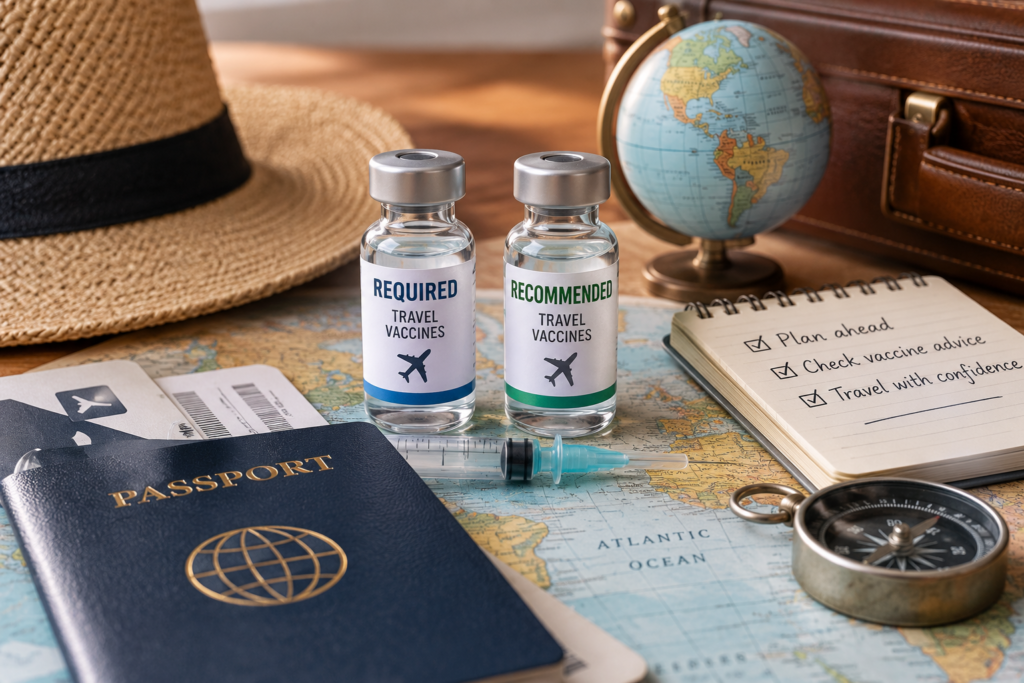


Yes, most travel vaccines while breastfeeding are safe for you and your baby. Inactivated vaccines, like hepatitis A, hepatitis B and the typhoid injection, do not harm your milk or your supply.
Live vaccines need more thought. Yellow fever shots are not given to babies under 9 months unless the trip has a high risk. Also, some malaria tablets depend on your baby’s weight.
Your baby also needs their own protection, because breast milk does not pass on travel immunity. So which jabs are fine, and what should you ask at your travel vaccine appointment? Read on.
Can You Have Travel Vaccines While Breastfeeding?
In most cases, yes. Breastfeeding is not a reason to skip travel jabs. UK advice, such as from TravelHealthPro, supports vaccinating nursing mums. Protecting your health is vital when caring for a young infant.
If you get preventable illnesses like hepatitis A or typhoid, it can cause serious issues. These may include dehydration, exhaustion, or even hospitalisation. This would make it tough to care for and feed your baby safely.
Staying protected matters even more with a baby in tow. Typhoid or hepatitis A could leave you too ill to care for them. Additionally, receiving vaccines helps reduce the overall risk of bringing serious infections home into your household environment.
So the real question is not whether to vaccinate. It is which vaccines suit you, and that mostly comes down to the type of vaccine being administered.
How Travel Vaccines Are Grouped: Inactivated vs Live
Inactivated vaccines
Inactivated vaccines have killed germs, purified proteins, or small inactivated parts like toxoids. Because these organisms are completely dead or synthesised, they cannot multiply or cause infection in your body. Consequently, they pose no risk of passing active pathogens into your breast milk or causing infection in your infant.
Live vaccines
Live vaccines use a weakened (attenuated) strain of the germ. They train your body to build a strong immune response. However, since the virus or bacteria can replicate in small amounts, there is a low risk that live vaccine strains might enter breast milk.
This is why live vaccines need a careful risk assessment with a healthcare professional. This should happen one-on-one before you proceed. Consider your destination’s exposure risk, along with your baby’s age and health.
Travel Vaccines and Breastfeeding: A Quick Safety Guide
Good news: travel prep for breastfeeding moms is easy. The table shows the vaccines UK travellers often ask about.
| Vaccine | Type | While breastfeeding |
| Hepatitis A | Inactivated | Generally safe |
| Hepatitis B | Inactivated | Generally safe |
| Typhoid (injection) | Inactivated | Generally safe |
| Typhoid (oral capsules) | Live | Injection usually preferred |
| Rabies | Inactivated | Generally safe |
| Cholera (oral drink) | Inactivated | Generally safe |
| Diphtheria, tetanus and polio | Inactivated | Generally safe |
| Meningitis ACWY | Inactivated | Generally safe |
| Japanese encephalitis | Inactivated | Given if your trip needs it |
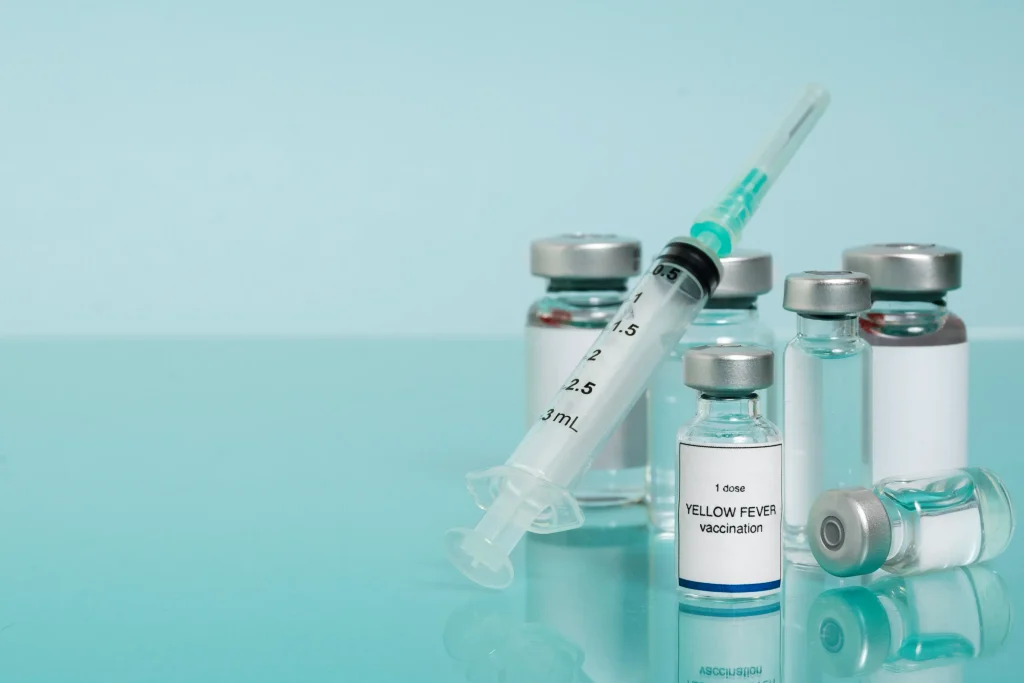
| Yellow fever | Live | Usually avoided unless risk is high |
| Dengue | Live | Not advised |
A table is a starting point, not a prescription. Your trip and your baby’s age still need checking.
Vaccines Generally Considered Safe
Hepatitis A, hepatitis B and the typhoid injection are the jabs most travellers need. All three are inactivated and widely given to breastfeeding mums in the UK.
The same goes for rabies, cholera, meningitis ACWY and the diphtheria, tetanus and polio booster. You can keep feeding as normal before and after each one.
There is no need to time feeds around your appointment or to pump and throw milk away. Feed your baby whenever they are hungry.
Yellow Fever Vaccine While Breastfeeding
Yellow fever needs the most care. It is a live vaccine, and there have been very rare reports of breastfed babies under 9 months becoming unwell after their mother was vaccinated.
Those cases mostly involved very young infants. UK guidance typically advises against vaccination for mothers breastfeeding infants under 9 months. This is unless travel to a high-risk area cannot be postponed.
Yellow fever itself can be deadly, so the decision is about balancing risks. A clinician at a registered centre considers your destination, your baby’s age and how long you will stay.
If the vaccine is not right for you, a medical exemption letter may help with entry rules. It does not protect you, so bite prevention becomes even more important.
Antimalarial Tablets While Breastfeeding
There is no malaria vaccine for travellers, so tablets and bite prevention are your main defense. Some antimalarials suit breastfeeding mums well, while others are best avoided.
Atovaquone-proguanil is often an option once your baby weighs at least 5 kg. Mefloquine can be used, but it is not allowed for breastfeeding mothers or those with a history of depression or anxiety under standard pharmacy PGDs.
Doxycycline is usually avoided while breastfeeding. The right choice depends on your baby’s age and weight, your own health and where you are going.
One key point: the small amount of medicine in your milk will not protect your baby from malaria. Your baby needs their own protection from bites and sometimes their own tablets.
Will the Vaccines Affect My Milk Supply or My Baby?

This is the worry we hear most, and the answer is reassuring. Approved travel vaccines do not dry up your milk or change its quality.
Inactivated vaccines cannot infect your baby. Some of the antibodies you make may even pass into your milk, giving your baby a small extra boost.
You might feel tired or have a sore arm for a day or two. That is your immune system at work, not a risk to your baby.
Other Travel Health Precautions for Breastfeeding Mums
These everyday habits matter just as much as jabs:
- Stay hydrated. Heat and long flights dry you out fast, which can make feeding harder. Drink bottled or treated water often.
- Be strict with food. Stick to freshly cooked meals and fruit you peel yourself. A bout of food poisoning can leave you drained.
- Use a safe repellent. DEET up to 50% is considered safe for breastfeeding mums and babies over two months. Wash it off your hands and breasts before feeding.
- Cover up at dusk. Long sleeves for you and a mosquito net over the cot add extra protection.
- Wash your hands. Do it after nappy changes and before every feed.
Does Your Breastfed Baby Need Travel Vaccinations Too?

Breast milk passes on some antibodies, but not enough to guard against travel diseases. Your baby needs their own plan.
Start by checking that their routine NHS vaccines are up to date. Some travel vaccines can only be given when babies are older, and yellow fever is not usually given before 9 months.
If your baby is too young for a vaccine, the clinic will focus on other ways to keep them safe. Sometimes that means rethinking a high-risk destination for now.
What to Tell Your Travel Clinic During Your Appointment
Have these details ready before your visit:
- Your baby’s exact age and current weight
- How often you breastfeed and whether your baby has formula too
- Every country and region you will visit, with dates
- Where you will stay, from city hotels to rural homes
- Your own medical history and any medicines you take
- Your vaccine records and your baby’s red book
FAQs
Do I Need to Bring My Baby to My Appointment?
You can, and many mums do. Feeding during the visit is fine, and staff are used to little ones joining consultations.
How Soon After Birth Can I Have Travel Vaccines While Breastfeeding?
There is no set waiting period after birth. Most inactivated vaccines can be given whenever you need them, once your health has been checked.
Is It Safe to Fly While Breastfeeding?
Yes. Feeding during take-off and landing may even help ease pressure in your baby’s ears. Ask the airport about carrying expressed milk in hand luggage.
Should My Partner Get Travel Vaccines Too?
Yes. Everyone travelling needs their own health check. Vaccinated family members pose no known risk, though caution is recommended with live vaccines like chickenpox if a rash develops.
What If I Become Pregnant Before My Trip?
Tell the clinic straight away. Some advice changes in pregnancy, mainly for yellow fever and some malaria tablets, so your plan may need reviewing.
Conclusion
Most travel vaccines are safe to receive while breastfeeding and generally do not affect your milk supply. Inactivated vaccines like hepatitis A, hepatitis B, and the injectable typhoid vaccine can be given safely. This way, you protect yourself without affecting your milk supply.
Yellow fever and some malaria tablets need careful consideration because of risks and age-related considerations. Your baby needs their own protection plan. At your travel clinic visit, tell your healthcare provider your baby’s exact age, feeding routine, and full travel plans. This helps them create a safe and effective plan for your family.

Dipesh Jogi is the Superintendent Pharmacist at Chemitex Pharmacy in Islington, London. A GPhC-registered pharmacist (GPhC 2073384), he provides professional pharmacy care and supports patients through NHS prescriptions, vaccinations, health checks, and private clinical services.