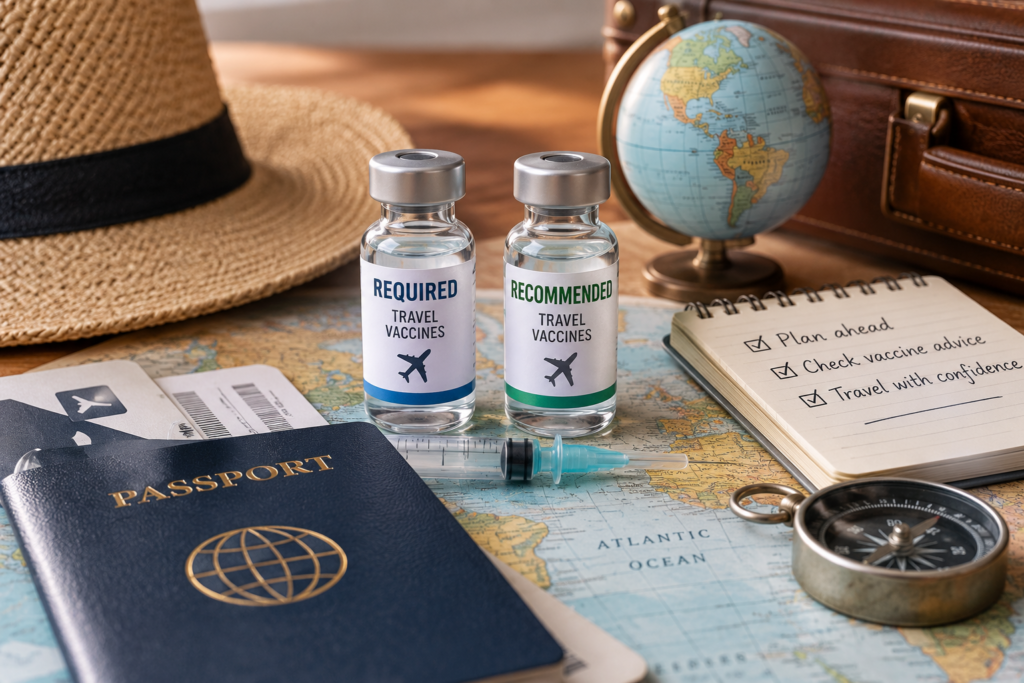


Visit a travel clinic before you go abroad. This helps customise your health plan for your destination, medical history, and travel dates.
A qualified healthcare professional checks your vaccine needs. They also talk about malaria prevention and explain entry certificate requirements. Ideally, you should book 6 to 8 weeks before departure to complete multi-dose vaccination schedules on time.
Most people think it is just jabs. The part travellers miss could save your holiday.
What Is a Travel Clinic?

A travel clinic is a healthcare facility that helps you prepare for international trips. It looks at your destination, trip length, planned activities, and health history. This way, it can identify any health risks you might face.
In the UK, many travel clinics operate out of local community pharmacies. Trained travel health pharmacists offer detailed consultations. They give destination-specific vaccinations, prescribe antimalarials, and provide key preventative travel medicines.
A travel clinic helps you get the protection, medications, and health documents you need. This ensures you travel safely and meet entry rules for your destination.
Why Pre-Travel Health Advice Matters
Imagine saving for months for a dream trip to Southeast Asia or South America. Then, you end up stuck in your hotel room for three days with bad food poisoning or a fever.
Travellers’ diarrhoea is the most common travel-related illness, but it is on the milder end of the spectrum. Vector-borne and food- or water-borne infections, like Hepatitis A, typhoid, yellow fever, and malaria, can cause serious problems. They may even require hospitalisation far from home.
Getting professional pre-travel health advice lowers these risks. Timely immunizations and custom prevention plans help keep you safe. It allows you to enjoy your trip with confidence, peace of mind, and clear knowledge on how to stay safe.
7 Key Benefits of Visiting a Travel Clinic Before Travelling

Rather than relying on generic online forums, here are seven vital reasons to seek professional travel health advice.
1. Get Personalised Travel Health Advice
Two people going to the same country can need very different advice. A backpacker sleeping in rural huts faces more risk than someone in a city hotel. The pharmacist looks at your route, length of stay, activities and season. Rainy seasons often bring more mosquito-borne illness.
2. Find Out Which Travel Vaccinations You May Need
Vaccine advice shifts with outbreaks and country rules. The pharmacist checks current UK guidance on the day you visit, using sources like TravelHealthPro. You may need common jabs like hepatitis A and typhoid, or less common ones such as rabies or Japanese encephalitis. You will also hear which ones you can skip.
3. Reduce the Risk of Travel-Related Illnesses
Many travel illnesses come from food, water, insect bites or animals, not just missing jabs. You get practical tips on food, water and what to do after an animal bite. Small habits like these stop a lot of illness.
4. Get Advice on Malaria Prevention
There is no malaria vaccine for UK travellers. Prevention relies on the ABCD approach: be aware of the risk, prevent bites, use antimalarial tablets if needed, and seek quick diagnosis if you have a fever.
If you need antimalarial tablets, your pharmacist will explain your options and dosage. It’s crucial to continue all courses after leaving the risk area: Atovaquone/proguanil for 7 days, Doxycycline for 4 weeks, and Mefloquine for 4 weeks.
5. Prepare for Your Trip in Good Time
Booking 6 to 8 weeks before travelling allows adequate time for multi-dose vaccine courses and optimal immunity build-up. For instance, Hepatitis B typically requires three doses spread over six months (though accelerated options exist), rabies involves three doses over 21 to 28 days, Japanese encephalitis requires two doses over 28 days, and oral cholera requires two doses given 1 to 6 weeks apart. Booking early means you can finish a full course or spread jabs out over a few visits.
6. Receive Advice Based on Your Medical History
Your personal medical history determines which vaccines are safe for you. Live vaccines, like yellow fever, are not safe for some people. Avoid them if you have severe immunosuppression, active thymus disorders, or recent thymus surgery.
They are also risky for those with severe egg or latex allergies or a family history of YEL-AVD or YEL-AND adverse events. Pregnant or breastfeeding women also require careful clinical evaluation before receiving live vaccines.
Travellers aged 60 and over undergo additional benefit-risk assessment due to an elevated risk of severe adverse reactions. The pharmacist shares details about serious side effects. If your health is complex, you might see your GP or a travel medicine specialist.
7. Check Whether You Need Vaccination Certificates
Some countries will not let you in without proof of vaccination. The International Certificate of Vaccination or Prophylaxis for yellow fever is the best-known example.
Pilgrims going to Saudi Arabia for Hajj or Umrah must have proof of a Meningitis ACWY vaccination. This vaccination needs to be given at least 10 days before they arrive. Certificates are valid for 5 years for quadrivalent conjugate vaccines or 3 years for polysaccharide vaccines.
Chemitex Pharmacy is a registered Yellow Fever Vaccination Centre on Hornsey Road, providing full consultation, vaccination, and official certification in a single visit.
What Happens During a Travel Clinic Appointment?

A typical travel clinic appointment takes around 20 to 30 minutes. Here is how it runs.
- Risk assessment: You share your trip details, health conditions and past vaccines.
- Consultation chat: The pharmacist goes through each country on your route and the risks there.
- A clear plan: You hear which vaccines are advised, which are optional and what they cost.
- Consent and vaccines: Once you agree, jabs are given in a private room. Each one takes seconds.
- Medicines and paperwork: You may get travel medicines, a vaccine record and any certificate you need.
- Aftercare & Safety: You will get advice on common side effects. It includes precautions for fainting after vaccination. You’ll also learn how to report any bad reactions through the MHRA Yellow Card scheme.
Pharmacy Travel Clinic vs GP vs NHS: What’s the Difference?
The NHS covers some travel vaccines for free. These are hepatitis A, typhoid, cholera and the diphtheria, tetanus and polio booster, according to the NHS travel vaccinations page.
The catch is access. Free jabs come through your GP, and not every surgery runs a travel service. Others like rabies are private, and GPs cannot give yellow fever unless registered.
| Feature | Pharmacy Travel Clinic | GP Surgery |
| Booking Availability | Flexible, often within days | Varies, often weeks in advance |
| Vaccine Range | Full range of travel vaccines | Often limited to standard NHS jabs |
| NHS Funding Support | Private service fees apply | Covers 4 free jabs (Hepatitis A, Typhoid, Cholera, DTP booster) if service offered |
| Yellow Fever Certification | Available at designated registered centres | Only if registered as a designated centre |
| Malaria Antimalarials | Consultation & direct private supply | Private prescription required |
If cost matters most, ask your GP about free jabs first. A pharmacy can cover everything else in one visit.
When Should You Visit a Travel Clinic Before Travelling?
The general recommendation is to book your consultation 6 to 8 weeks before you fly. This provides adequate time for multi-dose vaccine schedules to complete.
Long or multi-country trips may need 8 weeks or more. Rabies and hepatitis B courses take time, though faster schedules exist.
Leaving it late? Come in any way. Many vaccines still give some protection, and the food, water and malaria advice works from day one.
How to Prepare for Your Travel Clinic Appointment
Bring or have ready:
- Your full itinerary, including regions, dates and type of stay
- Past vaccine records, such as your red book, old certificates or the NHS App
- A list of current medicines, including the pill, inhalers and supplements
- Any health conditions or allergies
- Whether you are pregnant or planning a pregnancy
- Your questions, written down
FAQs
Is a travel clinic worth it for a short trip?
Yes. A one-week trip carries the same food, water and mosquito risks. Short stays in high-risk areas can still cause serious illness.
Do I Need Jabs to Visit Family Abroad?
Often, yes. People visiting family tend to stay longer, eat local food and skip precautions, raising their risk of typhoid and malaria.
Can Children Get Travel Vaccines?
Yes, though minimum age limits apply depending on the vaccine: Hepatitis A is suitable from 1 year, injectable typhoid from 2 years, oral typhoid from 5 years, cholera from 2 years, yellow fever from 9 months, and Japanese encephalitis from 2 months. Always bring your child’s red book to the consultation.
Can I Have Jabs While Unwell?
A mild cold is usually fine. If you have a fever, the pharmacist will likely delay your jab until you feel better.
Do Travel Vaccines Need Boosters?
Possibly. Typhoid protection lasts about three years, while some vaccines last much longer. Old records help the pharmacist check what you still need.
Conclusion
The benefits of visiting a travel clinic before travelling go well beyond a quick jab. You get advice that fits your route, your health and your plans.
You can handle vaccines, malaria advice, food and water safety, and certificates all in one visit. Aim to book 6 to 8 weeks prior to departure whenever possible.
Planning a trip from North London? Chemitex Pharmacy on Hornsey Road is near Finsbury Park and Holloway Road stations. Book your appointment online or give us a call.

Dipesh Jogi is the Superintendent Pharmacist at Chemitex Pharmacy in Islington, London. A GPhC-registered pharmacist (GPhC 2073384), he provides professional pharmacy care and supports patients through NHS prescriptions, vaccinations, health checks, and private clinical services.