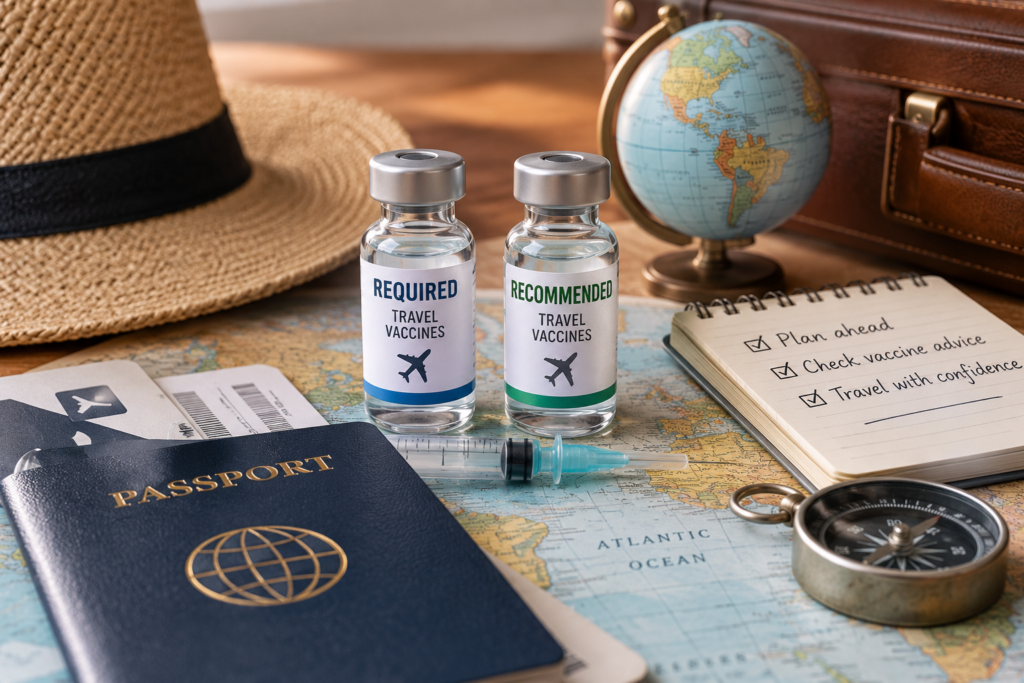

Yes, babies can have travel vaccinations, but the starting age is different for every vaccine.
Hepatitis B can be given from birth. MenACWY starts at six weeks, Japanese encephalitis at two months, and rabies has no minimum age at all.
MMR and Hepatitis A start from 9 to 12 months. Typhoid and cholera usually wait until two years or five years depending on the form, and yellow fever is not given before nine months.
Routine NHS jabs always come first, and malaria tablets are dosed by weight rather than birthday.
Age is only half the answer. The country, the season, your baby’s weight and how long you are staying all change the plan. At our travel clinic, we work through these details with you to help make sure your baby gets the right travel advice.
Table of Contents
Why Babies Need Travel Protection
Small children get ill faster and get worse faster. A baby with diarrhoea can become dangerously dehydrated in a day, long before an adult would feel unwell.
Malaria is the clearest example. Around three quarters of malaria cases imported into the UK are in families visiting friends and relatives, mostly in West Africa, and young children are over represented in the severe cases.
There is also a quiet assumption we hear a lot at the counter. Parents visiting their own home country often feel immune by association, so the baby travels unprotected.
Your baby has no immunity to typhoid, hepatitis A or malaria, whatever your own history is.
Travel Vaccines Babies Can Have and From What Age
| Vaccine | Youngest age it can be given |
| Hepatitis B | From birth |
| MenACWY (Nimenrix / MenQuadfi) | From 6 weeks (Nimenrix requires 2 doses under 6 months) |
| Japanese encephalitis (Ixiaro) | From 2 months |
| Rabies | Any age, including newborns |
| MMR (routine/travel schedule) | From 9 to 12 months (6 months by GP decision) |
| Hepatitis A | From 12 months |
| Tick borne encephalitis (junior brand) | From 12 months |
| Typhoid injection | From 2 years |
| Cholera (Dukoral drink) | From 2 years |
| Yellow fever | From 9 months |
Note: BCG (tuberculosis) can be given from birth through NHS specialist clinics, but it is not available as a standard community pharmacy travel service.
Rabies surprises people. It has no lower age limit, and we would argue it matters more for small children than adults.
Toddlers crawl, grab animals and often hide a scratch or a lick on broken skin. Rural Asia and parts of Africa are where this becomes a real decision, not a box ticking exercise.
Travel Vaccines That Are Not Suitable for Young Babies
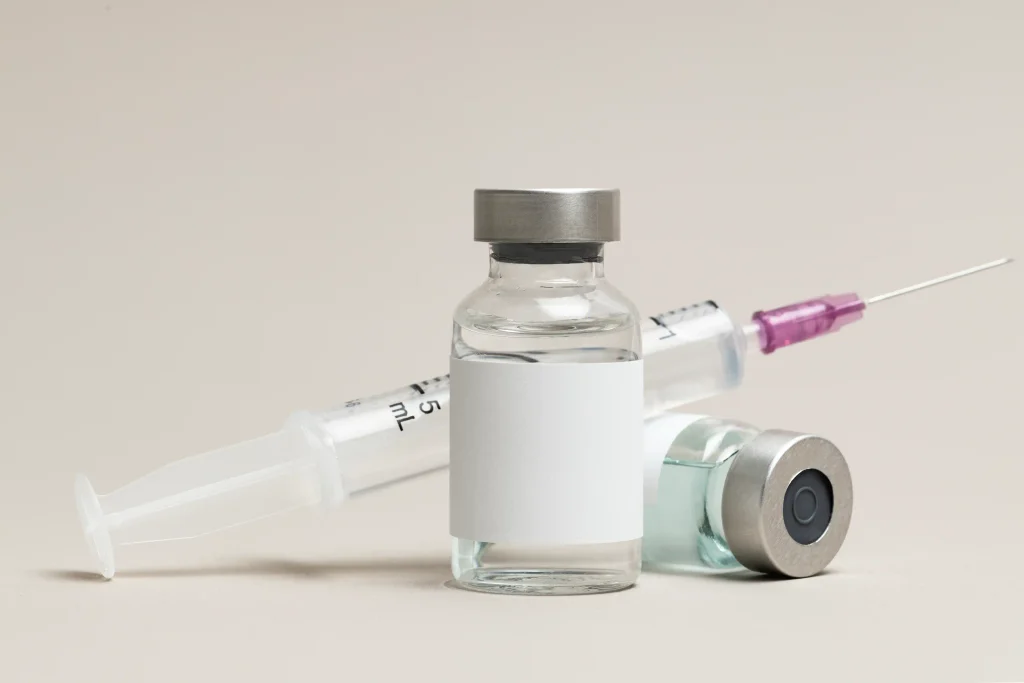
A few are simply off the table until your child is older.
Oral typhoid capsules (Vivotif) need swallowing whole and start at 5 years of age. As a live oral vaccine, it cannot be given concurrently with certain antibiotics or antimalarials, and children who cannot swallow capsules whole will need the injectable vaccine once they reach two years.
Hepatitis A before 12 months is usually pointless rather than dangerous. Antibodies passed from mum can blunt the response, so the dose may not stick.
Doxycycline, one of the standard malaria tablets, is never used under 12 years because it affects developing teeth and bone.
Yellow Fever and Babies Under 9 Months
Yellow fever vaccine is live, and this one has a hard line under it.
It must never be given below six months of age. There is a rare but real risk of the vaccine strain causing brain inflammation in very young infants.
Between six and nine months it is only considered in exceptional situations, such as an active outbreak with travel that genuinely cannot be moved. That call is made at a registered yellow fever centre, not casually.
From nine months a single dose gives lifelong protection for most people, and the certificate becomes valid ten days later.
Most countries do not demand a certificate for infants under nine months, and some set the cut off at one year. Entry rules change, so the requirement needs checking close to departure.
Our honest advice after years of these conversations: if you are heading to an area with active yellow fever transmission and your baby is under nine months, move the trip. A waiver letter protects your paperwork, not your child.
Chemitex Pharmacy is a registered Yellow Fever Vaccination Centre, so we can assess the risk and issue certificates on site in Islington.
Can Babies Take Malaria Medication?
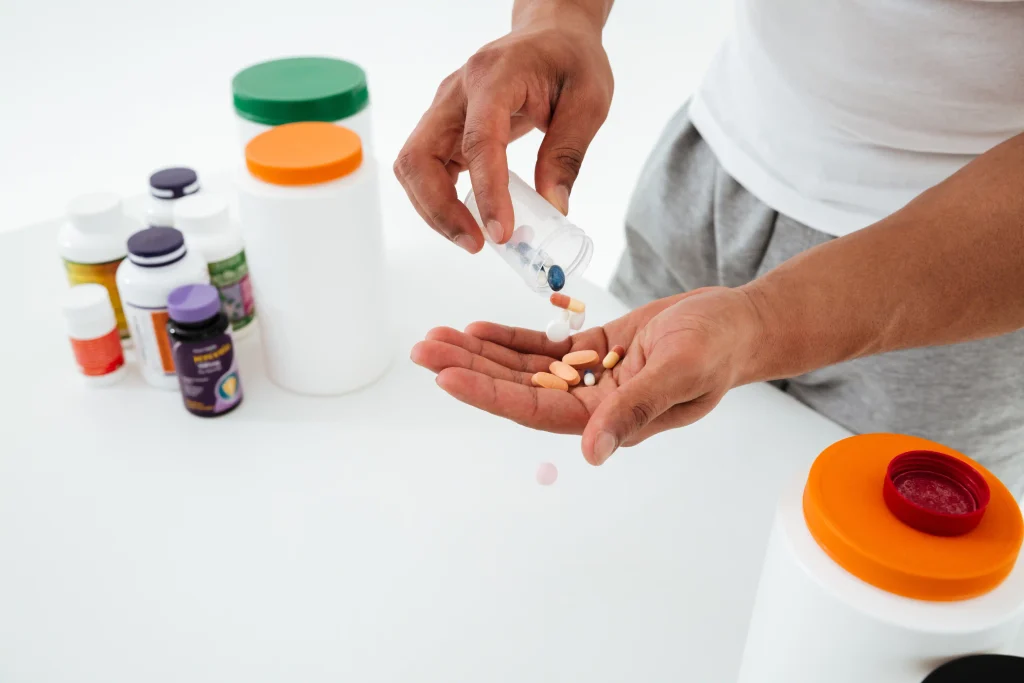
Yes, and dosing goes by weight.
Chloroquine with proguanil can be used in infants, given as a liquid or as crushed tablets mixed into something sweet, but note that proguanil is not recommended for children under 5kg unless under specialist advice. Furthermore, chloroquine with proguanil only suits areas where the parasite is still sensitive, which rules out most of sub Saharan Africa.
Mefloquine can be used from 5 kg. Atovaquone with proguanil, the paediatric version, is licensed from 11 kg and is sometimes used lower down on specialist advice.
Getting the dose in is the practical battle. Tablets get spat out, and a half swallowed dose is not a dose.
The tablets also have to continue after you get home, either for one week or four weeks depending on which one you take. Stopping at the airport is the most common mistake we see.
No tablet is fully protective in a baby. Bite prevention and quick access to medical care matter just as much.
Routine NHS Vaccines Come First
Half your baby’s travel protection is already built into the NHS schedule.
The six in one at eight, twelve and sixteen weeks covers diphtheria, tetanus, polio, hepatitis B, Hib and whooping cough. Those are travel diseases in most of the places UK families visit.
Rotavirus drops protect against a common cause of severe infant diarrhoea. The course is time limited, so the first dose has to be before 15 weeks.
Measles is the one to watch. Outbreaks are running in several popular destinations. While routine MMR starts at 9 to 12 months, an early dose can be considered from six months for travel upon GP decision and assessment.
That early dose does not count towards the routine two, so your child still needs both later.
If you are travelling before the schedule catches up, ask your GP surgery about bringing doses forward. The primary course can start at six weeks with four week gaps.
Protecting a Baby When Vaccines Aren’t an Option
For under ones, physical protection does the heavy lifting.
Use a fitted mosquito net over the cot, pram and buggy, ideally treated with permethrin. Nets work while your baby sleeps, which is when biting mosquitoes are most active.
Insect repellent containing up to 50 percent DEET can be used on babies from two months. Apply it to your hands first, then to your baby, avoiding their hands, eyes and mouth.
Sunscreen goes on before repellent, not after.
Make up formula with bottled or freshly boiled water, and skip ice and salads. Breastfeeding keeps this much simpler if you are still able to.
Pack oral rehydration sachets and infant paracetamol. Find out where the nearest decent hospital is before you need it, and check your insurance covers the baby by name.
Fever in a baby or young child up to a year after returning from a malaria area is a medical emergency. Say where you have been, straight away.
When to Book Your Baby’s Travel Appointment
Six to eight weeks ahead is the target.
Courses need the time. Rabies runs to 2 or 3 doses, Japanese encephalitis needs two, MenACWY may require multiple doses depending on brand and age (e.g. Nimenrix requires 2 doses under 6 months), and yellow fever certificates only start counting ten days after the jab.
Bring the red book. We need to see what has already been given before adding anything private.
Left it late? Still come in. A week before departure we can usually give something useful, plus proper advice on bites, water and what to do if your baby spikes a temperature abroad.
Book a Travel Consultation for Your Family

We run family travel appointments at Chemitex Pharmacy, 332 Hornsey Road, London N7 7HE (Phone: 0207 272 4869), covering Islington, Holloway and Finsbury Park.
One appointment can cover parents and children together, including yellow fever certificates, malaria tablets and a risk assessment for the exact area you are visiting.
Book online or call the pharmacy, and bring your baby’s red book with you.
FAQs
Can my baby have more than one travel vaccine on the same day?
Yes. Several can be given in one visit, usually in different limbs. Live vaccines are either given together or spaced four weeks apart.
Are travel vaccines free for babies on the NHS?
Some are. Hepatitis A, typhoid, cholera and polio boosters are free at GP surgeries. Rabies, Japanese encephalitis, yellow fever and tick borne encephalitis are private.
What happens if my baby is unwell on the appointment day?
A mild cold or snuffles is fine. We postpone if your baby has a fever or seems properly poorly, since symptoms can confuse the picture afterwards.
Can I have the yellow fever vaccine while breastfeeding a young baby?
Usually not if your baby is under nine months. The live virus can rarely pass through breast milk, so travel is normally delayed instead.
Will a private travel jab appear in my baby’s NHS record?
Not automatically. We give you a record card and you can ask your GP surgery to add it, which matters for future boosters and school checks.
Conclusion
Babies can have travel vaccines, just not all of them and not at any age.
Hepatitis B, MenACWY, Japanese encephalitis and rabies are all possible in the first few months. MMR, Hepatitis A, typhoid, cholera and yellow fever need your child to be older, with nine months the hard floor for yellow fever.
Malaria tablets work by weight, and no tablet replaces a good net and repellent.
Get the routine NHS jabs on track first, book six to eight weeks before you fly, and get the plan matched to your actual destination rather than the country in general.